What entrepreneurs, bloggers & Rumplestiltskin have in common

My Dad says that much of the work that I do is to create something out of nothing. I’m not sure whether he thinks this is a good thing but it’s a concept I think about a lot.

I thought about it again when I read Matthew Buckland’s article on entrepreneurship yesterday where he describes “the entrepreneurial way “— starting your own company, raising capital for it and do what entrepreneurs do best — create something out of nothing and follow their own destinies.”

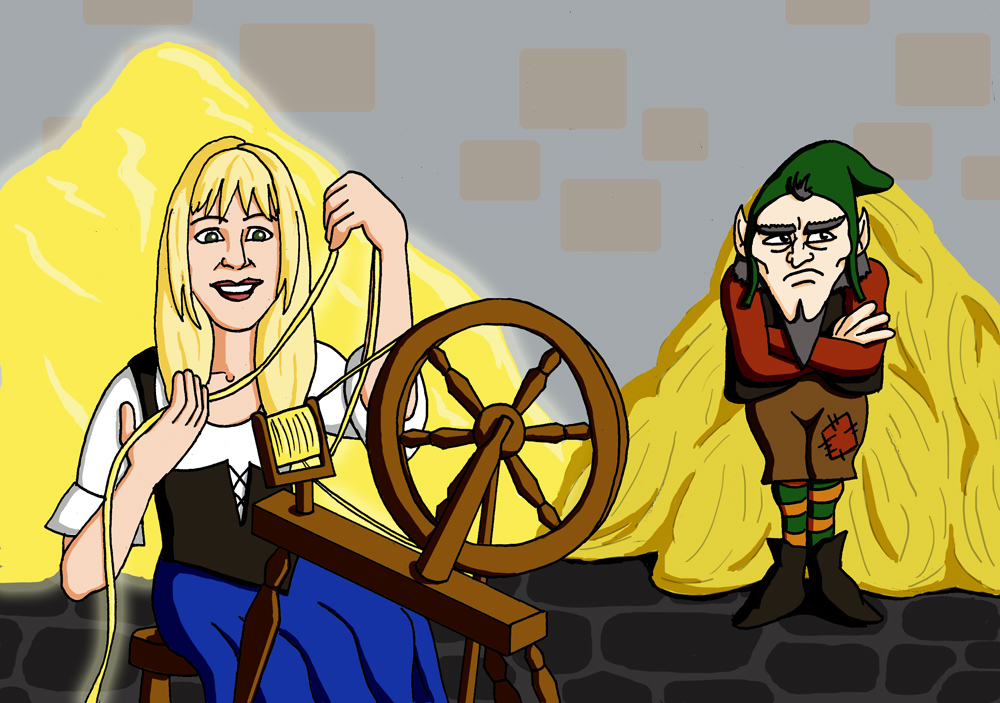
In fact  if I was to choose a fairytale character I relate to the most it’s probably the rather random Miller’s daughter in Rumplestiltskin because when there is important work to be done, I know  that, like her, I should lock myself in a dark room and spin straw into gold.

That I think is the challenge of the digital economy. To take the straw that is verbage, information and clutter and transform it into something that adds value to the world.

It’s also the dilemma of the freelancer, the leader navigating uncertain territory, the knowledge worker.

In an age which prizes collaboration and working together, all introverted workers (who thanks to Susan Cain and her book Quiet are now proudly coming out of the closet)  know the value of locking yourself up, facing a dark night of the soul and trying to produce gold.

Gold of course doesn’t need to be lucrative. (although if you’re in business, whether or not people want to buy is a convenient test of whether or not you’ve hit the mark) But sometimes it’s a sense that you are proud of the contribution you’ve made.

Whether or not it’s completely original, as long as it has a unique and authentic stamp to it, there’s nothing to beat the feeling of pride when you’ve created something you’re proud of. Something that makes you feel: ‘I worked hard, this might not be perfect yet but it’s good and I’m ready to show it to the world.’

And this is probably why we should all blogImage

Why you shouldn’t speak up

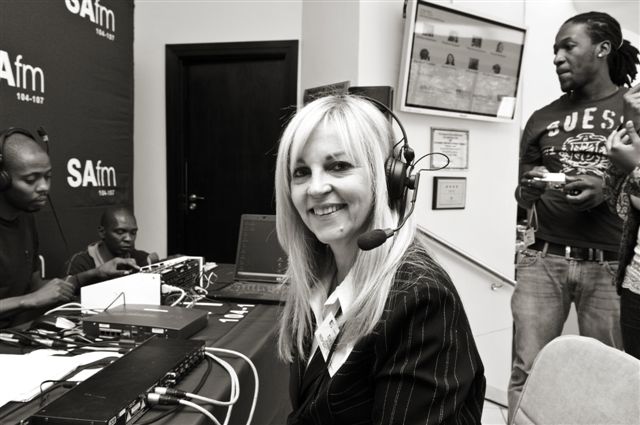
DebbySAFMheadphonepic

For years I’ve been telling women in particular about the importance of finding their voices and having the courage to speak up.  How we need to have the courage to confront, name what’s wrong and say how we feel because doing so  is an act of leadership which will pave the way for others who don’t feel the same courage at the time.

Of course, as we all do, I teach what I most need to learn and recently I spoke up about something I usually prefer to leave unchallenged.  Frankly I avoided this conversation because I didn’t feel like dealing with the backlash raising it would unleash.

Well as I expected, it unleashed some anger and bile and it made me remember all the reasons not to speak up.

  1. There will be people who will shout you down and make you feel unworthy, uneducated, ill-informed and silly
  2. You might be rejected by people who have more money, more influence and louder voices
  3. In some communities speaking up might even put your safety and life in danger.
  4. It is easier to keep quiet
  5. It can be scary to speak up
  6. You might embarrass your children
  7. You might upset your parents
  8. You might get unfollowed or unfriended

That’s it for now but I’m sure, if pressed I could come up with a few more.

So with all of these reasons not to speak up, why should we continue to do so?

Because as Anais Nin says “And the day came when the risk to remain tight in a bud was more painful than the risk it took to blossom.”

Finding our voice and using it represents a life force. When we choose to ignore it we die a little inside. Speaking up celebrates life and our responsibility to make the world as we see it a little better. And even though that’s only one reason it’s the very best one I’ve got.

Is there still place for a women’s leadership conference?

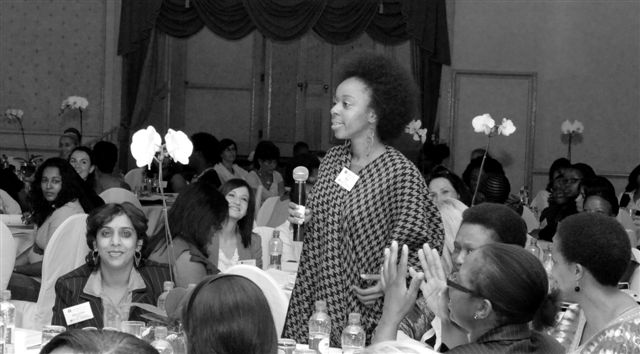
WLC-26

Yes I’m still asked this question, even though leadership conferences with all-male line-ups continue to be trotted out with alarming regularity. So I’m taking the liberty of publishing extracts of this general press statement as a blog post on the eve of the 8th Annual Women’s Leadership Conference.

At a time when many women hold top leadership positions, some might question the value of women’s leadership conferences. However, Debby Edelstein, founder, organiser and chairperson of the 8th annual Women’s Leadership Conference, says in a world where men still dominate the conference circuit, women leadership conferences are essential for mentorship and encouragement, giving women a platform to share their knowledge and experiences.

“There is an inordinate amount of conferences where it’s still regarded as acceptable to exclude women’s voices from the debate. Much of the context that we work within remains patriarchal and unwelcoming to women’s voices,” says Edelstein, referring specifically to a number of high profile conferences last year which boasted a conspicuous absence of women in their line-ups.

“I am exposed to brilliant talent on a daily basis, I’ve been championing the area of women’s leadership for 15 years, and I’m more motivated than ever to show women in leadership how they can raise their profiles to get the recognition they deserve.”

The Women’s Leadership Conference, which takes place on 22 May and 23 May 2013 at the Hyatt Regency Hotel in Rosebank, provides such an opportunity, however, with one strategic difference: In addition to a strong line-up of highly successful women leaders, this year includes a few top male speakers (namely GIBS dean, Professor Nick Binedell; journalist, Victor Dlamini; CEO of Avatar Zibusiso Mkhwanazi and co-founder of the Citizens Movement, Bobby Godsell).

This is the first time men have been included in the Women’s Leadership Conference, a decision which was made following a survey of the women who took part in last year’s conference. “Although women still dominate the event, placing women speakers and men speakers together on the same line-up entrenches the message that there is an abundant talent of top women speakers who are capable of sharing the podium with their male colleagues, women who are equally poised to speak about leadership issues.

“Importantly, the inclusion of men also helps to ensure the women’s leadership agenda becomes a conversation that men are having too,” she says.

Women are still traditionally responsible for taking care of families and communities, and as they take up more leadership positions at work, we need to see a different approach that encourages a more even distribution of responsibilities across the board. “Women’s leadership today is about changing the game completely and creating a different, healthier set of rules and values,” says Edelstein. “This can only be achieved by discussing these issues with our spouses, partners and male colleagues.”

“We want to encourage women to recognise their leadership abilities, to see themselves as leaders and raise the game in terms of the topics they speak about.  The Women’s Leadership Conference creates this space,” concludes Edelstein.

Faith in our Future (by a 17 year old South African)

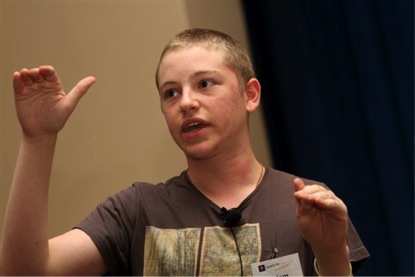
adam speaking

A guest blog post by my son Adam Edelstein

I wouldn’t call myself an optimist, nor would I call myself a pessimist. I understand the danger when walking alone at night in the middle of Newtown, but I also see the small acts of kindness prevalent in South African society. I see the shifty looking meth head walking on the other side of the road, but I also see the laugh shared by passing strangers.

With four of our cities being in the top 50 most dangerous in the world, many people seem to think our future looks grim. Corruption is rife and most of our country’s truly great leaders are either not in politics, over 80 or have already abandoned the country.

And yet, when I go get a coffee from around the corner from my house, and the guy at the counter gives me a high five and a huge grin, I don’t feel despair or bitterness. Make no mistake, I think there is a massive weight on the shoulders of our generation, but I don’t think we’re quite as alone as we think we are. I feel, in fact, quite the opposite. I feel hope.

When asked where one intends to work after university, many people say ‘London’, ‘New York’, ‘Paris’. I myself want to travel, and hopefully work all over the world. I also, however, intend to make a contribution right here in sunny South Africa, the most diverse, energetic and, frankly, also one of the scariest countries in the world.

I’ve seen a few, thankfully rare, individuals express loathing for our beautiful country. They feel hopeless and angry towards the ‘corrupt government’ for failing us so dismally. They say that they ‘can’t wait’ to get out of this garbage dump, and finally see the beautiful beaches of Australia.

To put it bluntly, our beaches are better.

The government has failed us in many areas and they will soon have to face up to their mistakes, and yet it is important to remember the many who truly try to change South Africa for the better. The many individuals who focus on the people, rather than the paycheck, and have dedicated their lives to fighting crime and the forces of evil.

As the generation that I am privileged to be a part of grow up, and finally face the true heat of South Africa, we won’t take ‘Sorry.’ for an answer. We are the generation that not only changes the face of this country, but the face of the world.

Already, calls for change have been echoing in school halls all around the country, and bills for internet censorship and media secrecy have been met with outcries that the government cannot help but listen to. The voice of the youth has always been powerful, but the potential of our generation has exceeded that of any before us. School children calling their teachers to their classes, ensuring they have a matric education. Teachers striking against the terrible conditions they are forced to teach in.

Perhaps the change we bring about is due to our size, but maybe it’s actually due to our nature. We’ve been brought up by the wisest teachers and parents the world has seen so far, and we’ve witnessed some of the world’s worst disasters.

We are the countless protesting against rape in, not only South Africa, but America, the Middle East, and Europe. We are misogynists and racists, but far more of us are gay pride, gender equality and anti-bullying activists. We ignore the few who seek attention to be popular, we see one another for who we truly are and we don’t see individuals by the colour of their skin, but rather by the nature of their hearts.

We are the largest, most revolutionary generation this Earth has ever seen. We are Generation Y, the Millenials. We have the responsibility and drive to change the world and the power to overcome more problems than the world has ever known before. Not only will we fix the cracks and flaws in modern society, but we will take our race to a place only dreamt of by past populations.

So no, I am not an optimist, and sometimes I feel exceedingly grim when looking at the obstacles we have to face in the coming years. And yet, I have hope that there is true innovation and goodness in this country; hope that the terrible crimes I hear of can be remedied, not by ‘teaching women to defend themselves.’ But rather by teaching young boys that rape is unacceptable, that no means no.

I have hope that by teaching the future leaders of our country that everyone is an equal, and that your character is measured by how you treat those who can do nothing for you, the majority of us will be supremely powerful leaders.

We are the leaders the world has been waiting for, and our time is now.

The Dark Side of the Little Red Hen

Red-hen4

Never mind the usual leadership gurus, it’s the story of the Little Red Hen and her can-do approach that has shaped my work life.

There are a few childhood narratives that strike a chord at the right time and have the power to stay with you forever. Together with a few other favourite stories my mother read and told (like Pookie the Rabbit whose whimsical illustrations gave me a love of blue flowers forever) the force of the Little Red Hen remains strong within me.

So imagine my delight to learn in Time that Sheryl Sandberg, COO of Facebook and author of the recently released Lean In, was also  influenced by this famous fable. In sixth grade, Sandberg took second place in a Florida-wide oratory contest when she used the folktale of the little red hen to talk about the importance of everyone doing their bit for America.

There’s a strong sense of industry, self-sufficiency and reliance in the tale. When the dog, the cat and the duck refuse to help her make bread “Then I will make it all by myself” said the Little Red Hen. “And she did.”

So over the years whenever I get frustrated that my ideas haven’t attracted the right support or sponsorship, I hear the feisty words of the Little Red Hen and remember “Then I will make it all by myself”.

It’s a liberating way to live. And I’ve launched a few businesses on the strength of this philosophy.

But as much as I love her and all that she represents, I’ve learned that there’s a dark side to the Little Red Hen and her self-sufficiency.

It’s the shadow side of the entrepreneur.

Benjamin Zander  conductor of The Boston Philharmonic Orchestra and author of the Art of Possibility told the story of how he once apologized to his students who didn’t attend an important concert because he, as their leader, failed to convey sufficiently how inspiring and beautiful that concert would be.

This I’ve learned is one of the most important roles of a leader – the ability to communicate a vision that takes people with you and allows them the joy of participation.

So I’ve learned that the Little Red Hen is missing a few tricks and these are a few ideas I’d like to share with her:

  1. Yes you’re tough, multi-skilled and resilient but are you a great leader? Take time to share your vision of toasty, freshly baked bread and how delicious it will be
  2. When you invite others to participate in your vision, you’re sacrificing complete control. There will probably be a mess in your kitchen that alone you wouldn’t make. But there’s fun, festivity and a sense of something bigger that can emerge if you tolerate the mess
  3. Don’t take perverse pride out of being a bad delegator. Everyone can learn to bake if you take the time out of your busy day to show them how
  4.  Sharing the bread you’ve baked is far more fun when you do it together in a spirit of love and generosity. Have your friends over and give them a slice

With love and appreciation for all you’ve taught me.

Debby

Leadership Lessons from hairy chicken in the dust

Over 1000 kids having Shabbat supper together last Friday night

Over 1000 kids having Shabbat supper together last Friday night

As my children experience the Habonim campsite that I loved as a teenager, I realize that there is an aspect of this organization that I can grasp only now that I’m not allowed on any more.

When we visited the campsite for DIGS day a few years ago it was quite surreal to see the stark difference between how our kids live in JHB and what the Onrust campsite has to offer.  And even though I’ve been there so many times before, experiencing it through the eyes of a parent gives a very different perspective.

Instead of Blackberries and iPads our spoilt city kids are united in their dustiness. The beach is their mall. Most of them look like they could do with a good scrub. Essentially it’s a village of 1000 run by kids and to the untrained eye it could look a bit like a (harmonious) scene from Lord of the Flies.

But that’s only what you can see on the outside. It’s only many years later that I am fully aware of how a Habonim education has shaped my life –as a channie, later as a maddie and many years later as a Mom and someone who works in leadership and organizational education.

The peer to peer learning; the dedication of the madrichim who work late into the night refining unforgettable learning programs when their channichim have gone to bed; the dynamic methods of teaching which could (and should) inform teaching methods at schools around the country – are all part of the fabric which make up a very unique learning environment.

But there are other more profound influences that are more subtle and harder to articulate. There’s the backdrop of honest and tolerant but rigorous questioning and challenging of ideas you don’t agree with; (more valuable than any debating training) a sensitivity and respect for human rights around the world while creating a sense of pride in who we are and where we come from and an unspoken commitment to paying it forward once you’ve had the benefit of being taught.

And typically enough, the lessons from Habonim are not static. This is the kind of education that keeps on giving and my most recent lesson as an over-protective Jewish Mom has been to learn to trust that my children are strong, competent and resilient and can do just fine without me for three weeks.

But oh boy I can’t wait to have them home

Glossary
channie/abbreviation for channichim – students
maddie/abbreviation for madrichim  – teachers or leaders
DIGS – dignitaries day – when past Habonim madrichim are invited on to the campsite
hairy chicken – famous Habonim Friday night kosher chicken

My name is Debby and I’m a conference addict


When we launched our latest offering “The Inspired Teachers Conference“, which is just around the corner, a friend asked me how many more conferences I was planning to create. The truth is, I honestly don’t know. But I will probably continue for a while because I’m addicted to the thrill of learning and discovering together.

I’m not sure exactly when the habit started but over the years, whenever I’ve been faced with a problem I can’t solve by myself, I host a conference.

In the process I’ve met fascinating people from a variety of different fields, but perhaps most significant of all, I’ve learnt something very important about how we learn. We learn better together, in conversation.

I often quote the findings of Harrison Owen, founder of Open Space Technology, who researched what it is that people enjoy most about conferences. The answer? The coffee breaks.

So, over the years, we’ve worked with the tension between attracting a star-studded cast and making sure that there is enough time for delegates to spend as much time as possible talking among themselves… because these are the conversations that are remembered years later, long after the logos on the goody bags have faded.

Like most lessons that stick, the only way I’ve learnt this lesson is through personal experience. I remember the first time I experienced working with a syndicate group when I was at Wits Business School many years ago. It was hell. Dunne, who had already completed his MBA and was far more experienced in the political dynamics of the syndicate, was amused as I tossed and turned at night, trying to come up with ways to get my all-male syndicate members to give me air time the next day.

Sleepless nights notwithstanding, some of the insights I learnt through that experience (most of them about myself) have stayed with me far longer than the finance notes I wrote down and tried to learn by heart.

The interactive experience of the syndicate group used by business schools is a valuable one, but it’s not nearly enough.

Etienne Wenger coined the term “Communities of practice” to describe the age-old phenomenon where people engage in a process of collective learning towards a common goal. His work has influenced educators ever since.

But collaboration in learning is now becoming even more prominent as we all get thrown together by the big melting pot of the digital economy. In fact, as gaming expert Jane McGonigal told World Economic Forum delegates recently, the 10 000 hours of gaming that the average young person will spend by the age of 21, will be spent honing the mastery of collaboration.

That’s why business, leadership and education is looking to the world of gaming for some insights. Young people might be obsessed with an online world that scares the living daylights out of us as parents, but they are also mastering skills we don’t know nearly enough about.

We know that the ability to work together across boundaries and across cultures is going to be one of the most essential leadership skills for our economic survival into the future. But many of us haven’t even mastered the basic art of listening, never mind the more advanced skill of working together.

I’m reminded of the importance of these skills every time I host a conference and learn as much from the delegates as from the speakers. Now that I’ve discovered this truth for myself there are all sorts of theories I can find to back up what I’ve already tested out more times than I can count – the best learning is learning together. And that’s why I keep creating conferences.

PS This also doubled up as my editorial for the February issue of The QualityLife Journal. If you’d like to subscribe (which would make me very happy) send an email to join-WLJ@quallife.co.za


How to have coffee with an influencer (or me)

I don’t much like the term influencer. Partly because it’s the kind of label that many people seem to attach to themselves in their twitter bios, not unlike guru and thought-leader.

Still, as sure as I love sour jelly beans there will always be people we want to get to see because of their perceived value to us. But by the law of meeting karma there are always people who want to see us too.

In the democratic world of the social media universe you see, we are all influencers and schmoozers to a greater or lesser degree.

So take comfort dear coffee-hunter in the knowledge that whoever you are chasing, they are chasing someone too. That’s the law of meeting karma. (just check out anyone’s twitter feed for proof)

Considering I have insight from both sides – as hunter and hunted, as influencer and as schmoozer – here are my Seven Strategies for having coffee with someone you really want to meet

1. In fact people are particularly protective of their coffee times. I have mine in bed in the morning when intelligent conversation is not yet a high priority.

After that I choose to have coffee with a few close friends I don’t see nearly enough. So if we’ve never met, unless you’re suggesting something that can change my life (in a good way) please don’t suggest that we grab a cup of coffee.

2. You could however start with an enticing and relevant personal tweet – everyone likes a mention on twitter– or an interesting email that gives a lot of juicy details. Our inboxes have become our to-do lists (Voicemail not so much.) So make sure your information is compelling enough to stand out.

3. Better too not to tell me that you want to pick my brains. Especially if you’ve never visited my website or attended any of my workshops. Sorry but there’s a fragile ego beneath this tough exterior. Rather suggest a conversation that you think I would find so valuable that I can’t resist spending time with you. (but don’t forget point 1.)

We teach what we most need to learn: About a week ago I sent a rather silly facebook message to an editor I thought would love to meet me because we have so many friends in common. (Erm wrong) Cardinal error: I also added that I wanted to pick her brains. And surprise surprise: she’s under far too much work pressure to see me. No-one I’ve met yet finds the prospect of having their brains picked irresistible!

4. Collaborate and learn more about anyone’s work via facebook or twitter or comment on their blog posts. I’m far more inclined to meet with potential facilitators (many of the people who want to see me want to lecture for QualityLife Company) if we’ve had an interesting interaction on social media for a while before getting an email out of the blue

5. If you’ve been to one of our conferences or workshops, please mention which one. I’m afraid I do (fragile ego again) give greater priority to people who are familiar with our work and our particular brand of facilitation and teaching. By the same token if someone has written a book and I want a meeting with her, I make a point of reading the book first before I write the email. “I haven’t read your book yet but..” has never cracked it as a killer opening line

6. Add value. Mention them in a blog post. Send them a copy of your new book or article (with no strings attached) Mention them on twitter or facebook. But whatever you do don’t lay guilt trips. Sometimes a short, no-need to respond email is the best way to go. Countless follow-ups asking if someone received your email is a sure way to turn someone off and chase them into a reclusive guilt-trip. (trust me I spend a fair amount of time there)

7. Finally, remember that the law of meeting karma is not personal. We all lead fast-paced lives and patience is still a virtue. I’m regularly humbled by the inspiring leaders who agree to meet me but of course there are those who let me know that now is not the time and I hope I take it graciously.

Because if I don’t sulk there’s a chance we might still have coffee one day.  And for those of you who’ve read this far, I like mine skinny and strong

But where are all the women?

Conferences are an enormous amount of work to organize,  easy to criticize and difficult to appreciate. It’s a bit like having a wedding for a few 100 brides.  I’ve made a concerted effort to attend as many conferences this year as part of my own commitment to learning and I can’t tell you what a treat it is to sit in the audience and take notes for a change rather than feeling responsible for the success or failure of an event where so much can go wrong. So before I criticize I want to appreciate the 2nd Annual Tech4Africa conference last week

By all accounts #T4A was a resounding success and everyone applauded organizer Gareth Knight @oneafrikan for a fine accomplishment that many described as world-class: Good speakers overall with a few inspiring stars, good food, good vibes, good turn-out, good networking. There was however a glaring omission.  A conspicuous absence of women from the line-up.

I tweeted my disapproval and so did a handful of other women delegates. We were referred to a comment on the official blog about how they didn’t want to dilute quality with quotas. When asked in the plenary in a response to a tweet by @katewolters asking the same question,  @oneafrikan reaffirmed that he tried to contact 30 women.  Some were unavailable, others didn’t get back to him.  This I think from personal experience is one of the hazards of the job and not particularly gender specific.  You just need to try harder if it’s important enough to reflect a diverse and accurate picture of any community.

“It’s notoriously difficult to get women speakers in technology” tweeted speaker @adamd. Not so. Our inaugural #wiredwomen event in September had a star-studded cast.  Some less high-profile than others but that’s what research is all about.

More inspiration if we’re looking to international shores can be found by looking at the line-up for The Grace Hopper Celebration of Women Computing in Portland Oregon next week. There’s a panel representing Africa next week that I was on (but sadly can’t attend) with the rather poignant title: “what if there were more women in technology in Africa”

There’s also the #GirlGeekDinners which started off in London, have been so popular in CT and are now coming to JHB.

There’s been a flurry of articles recently  about how important it is for women to  play a role in the alleviation of poverty in Africa by becoming more high profile in entrepreneurship and in the digital economy.  There’s increasing attention too as to how important it is for girls to do Science and Maths at school.

So I’d like to suggest that it’s not about a quota system that might dilute an otherwise interesting line-up. It’s not about appeasing some strident feminists in the audience who might detract from the otherwise positive and appreciative tweets. It’s about the role that half the population can play in using technology to change the world